
Table Of Contents
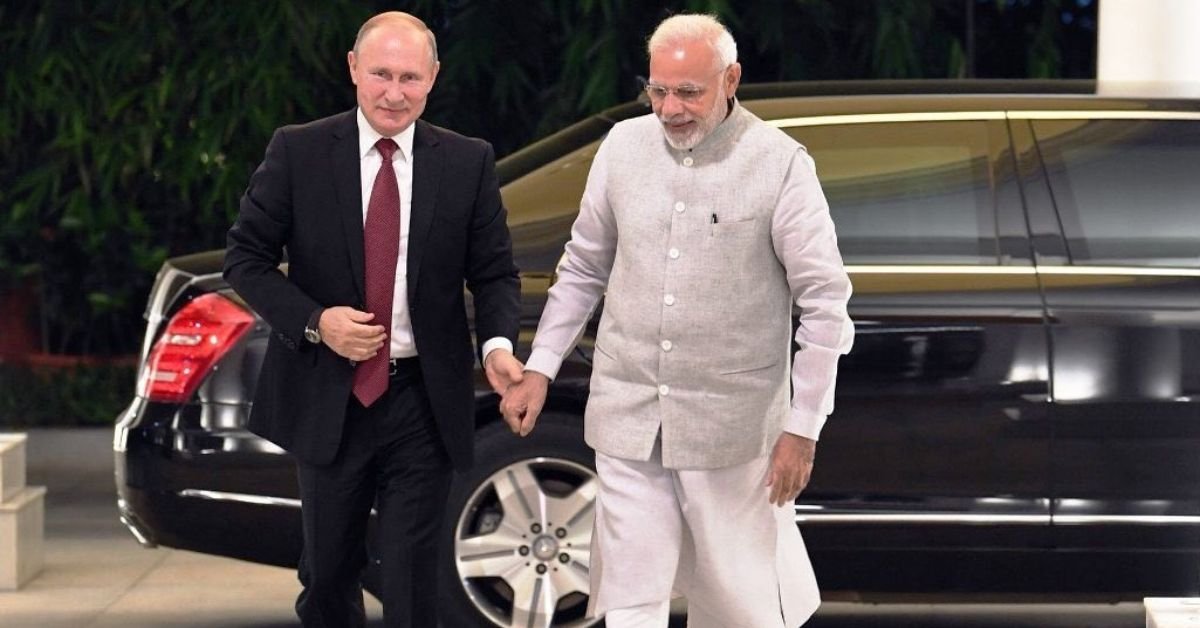
New Delhi, December 4, 2025: In a vivid display of enduring camaraderie, Russian President Vladimir Putin touched down at Palam Airport this evening, greeted with a bear hug from Indian Prime Minister Narendra Modi.
It is a scene straight out of diplomatic theater, but one loaded with geopolitical weight.
This two-day state visit, Putin’s first to India since 2021, marks the 23rd Annual India-Russia Summit, a ritual of friendship forged in Soviet-era steel and now tested by global fires.
As world powers jostle in a post-Trump re-election landscape, Putin’s trip is not just about handshakes and heritage sites.
It is a calculated move to deepen Russia’s foothold in Asia, counter its isolation from the West, and secure economic lifelines with one of the world’s fastest-growing economies.
For Modi, it is a masterclass in balancing acts: nurturing ties with Moscow while maintaining a close eye on Washington and Beijing.
A Warm Welcome Amid Global Chill
Putin’s arrival unfolded like a Bollywood-scripted reunion.
Modi, breaking protocol, met him plane-side, a gesture echoing their 2021 summit, before the Ukraine invasion.
Crowds in Varanasi waved portraits and performed aartis in anticipation, underscoring the grassroots affection for “Druzhba-Dosti” (friendship).
Tonight, a private dinner at Modi’s residence on Lok Kalyan Marg sets the intimate tone, reciprocating Putin’s hospitality during Modi’s visit to Moscow in July 2024.
But warmth masks urgency.
With US sanctions biting into Russian oil flows to India, down sharply from 2024 peaks, Putin arrives as peace talks on Ukraine falter under the Trump administration’s shadow.
Analysts see this as Moscow’s bid to signal normalcy: Russia is not sidelined; it has partners who matter.
Trade And Energy: The Economic Engine
At the summit’s core? Dollars and deals.
Bilateral trade surged to $68.72 billion by March 2025, up from $8.1 billion in 2020, fueled by discounted Russian crude.
However, imbalances persist; India exports mostly pharma and textiles, while importing energy and arms.
Both leaders aim for $100 billion by 2030, with pacts on nuclear energy, machinery, and rupee-ruble settlements to dodge dollar dominance.
Key sectors in focus:
- Energy Security: Guarantees for oil and gas amid US pressure; India, the world’s third-largest oil buyer, will not easily quit cheap Russian supplies.
- Diversification: Pharma, agriculture, and cybersecurity collaborations to balance the ledger.
- Worker Flows: Easier visas for Indian laborers in Russia’s Far East, addressing Modi’s youth employment push.
Expect signings in trade, healthcare, academia, and media, blueprints for a 2030 roadmap.
As one expert notes, this is not just commerce; it is “bypassing Western constraints in a multipolar world.”
Defense Ties: Arms And Autonomy
Russia supplies 60% of India’s military hardware, a legacy from Cold War vetoes at the UN.
Now, amid border tensions with China and Pakistan, new deals loom: Su-57 stealth fighters, S-500 air defenses, and joint naval drills in the Indo-Pacific.
For Putin, it is revenue and relevance; for India, tech transfers to boost self-reliance under “Make in India.”
However, US overtures, like the Quad alliance, complicate this.
Modi’s tightrope? Deepen Moscow ties without alienating Washington, especially as Trump 2.0 eyes tariffs and considers a Ukraine ceasefire.
Geopolitics: Beyond Bilateral Bonds
Tomorrow’s agenda extends into the global arena, encompassing Ukraine, Asia-Pacific stability, and countering China’s rise.
Putin and Modi will “exchange views on regional issues,” according to Kremlin statements, code for aligning on the concept of multipolarity.
India abstained from UN votes condemning Russia, prioritizing strategic autonomy.
Insight: The Trump Factor
This visit flips the script on US-India strains.
As Trump ramps up sanctions and rhetoric, Modi’s embrace of Putin broadcasts independence: India will not be lectured on partners.
For the Global South, it is a template to prioritize interests over ideology.
Petr Topychkanov of SIPRI calls it “Russia’s return to normalcy,” a subtle jab at Western isolation efforts.
Day two brings a Rajghat wreath-laying and summit closure, with President Droupadi Murmu hosting a banquet.
As Putin departs, the real takeaway? In a fractured world, old friends like India and Russia are not just surviving, they are reshaping alliances.
This is not mere diplomacy; it is a pivot toward a balanced order where sovereignty takes precedence over sanctions.
Watch for those announcements; they could redefine Eurasian power plays for years.
Post's Author