
Table Of Contents
A Fiery Session In Parliament
Hello everyone, at BRIEFFEEDS.COM, we are committed to delivering straightforward, reliable updates on the stories that matter most to India.
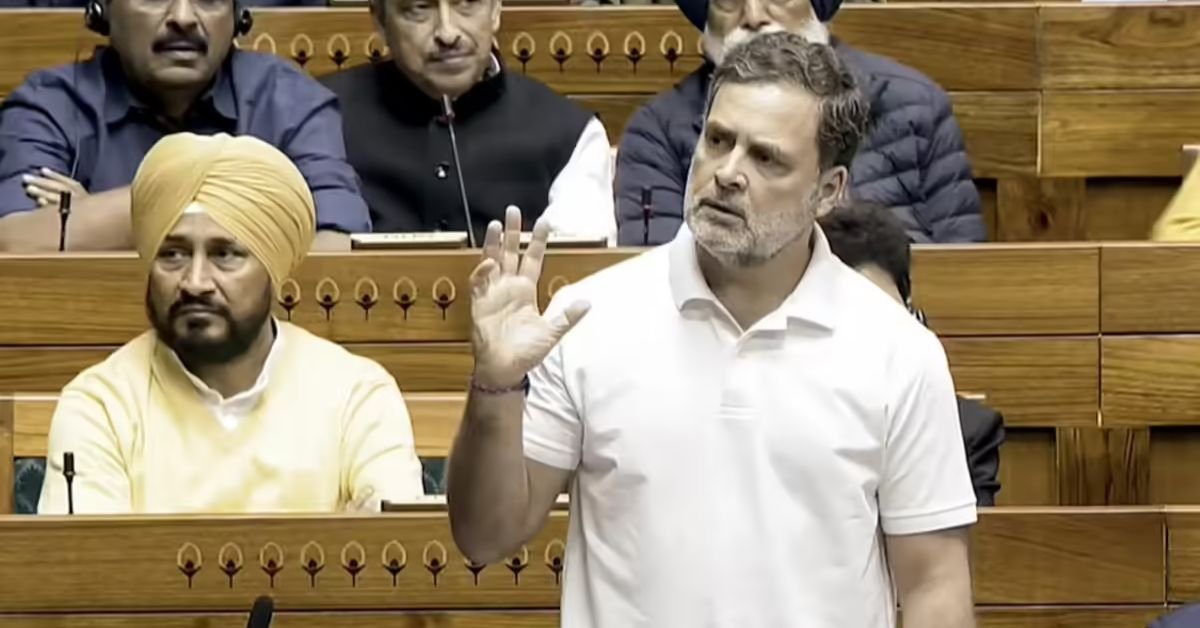
On February 11, 2026, the Lok Sabha saw high drama during the Budget Session when Leader of the Opposition Rahul Gandhi delivered a blistering speech targeting the government’s interim trade framework with the United States.
Labeling the agreement a “betrayal” of national interests, Gandhi accused the Centre of “selling Bharat Mata”, a phrase that instantly captured headlines and ignited passionate discussions across the country.
Key Points From Rahul Gandhi’s Speech
Rahul Gandhi spoke with intensity, focusing on what he sees as significant concessions that could harm India’s future.
Here are the core issues he raised:
- Data as India’s Greatest Asset: He described Indian data as the foundation for becoming a 21st-century superpower. According to him, the deal surrenders control over digital trade rules, ends data localization mandates, permits unrestricted data flows to the US, caps digital taxes, and removes requirements for source code disclosure – while offering big tech firms lengthy tax holidays.
- Unbalanced Tariffs: Gandhi claimed India’s average tariffs on certain goods have risen sharply. In contrast, US tariffs have dropped to zero, leading to a predicted surge in American imports without corresponding benefits for Indian exporters.
- Threat to Farmers: He warned that limited market access for select US agricultural products could flood India with cheaper imports, devastating small farmers growing maize, soybean, pulses, and cotton against large-scale American operations.
- Energy Security Concerns: Gandhi alleged that the framework could allow the US to influence or monitor India’s oil purchases from countries such as Russia or Iran, undermining India’s independent decision-making.
The speech grew emotional when Gandhi directly addressed the treasury benches: “You have sold Bharat Mata. Have you no shame?” The remark prompted interruptions, prompting the Speaker to intervene and maintain order.
What The India-US Interim Trade Framework Actually Says
The framework, announced on February 6, 2026, is a stepping stone toward a comprehensive bilateral trade agreement.
Its stated goals are to resolve longstanding disputes, boost bilateral trade, and strengthen economic ties.
Key elements include:
- India is reducing or eliminating tariffs on specific US products, including nuts, fruits, industrial goods, and certain agricultural items.
- Reciprocal tariff adjustments by the US on select Indian exports.
- India is expressing intent to increase purchases of US energy, aircraft, and other goods.
- Future negotiations on digital trade rules and non-tariff barriers.
The government insists the deal protects sensitive sectors like dairy and includes safeguards for farmers, while opening valuable US markets for Indian products.
Critics, however, argue that even limited openings carry risks.
Sector Wise Concerns At A Glance
| Sector | Rahul Gandhi’s Main Concern | Wider Implications Discussed |
|---|---|---|
| Agriculture | Exposure to large-scale US farming | Potential harm to millions of small and marginal farmers |
| Digital/Data | Loss of sovereignty over India’s most valuable resource | Impact on future tech and AI leadership |
| Energy | Possible external influence on oil sourcing | Questions over strategic autonomy |
| Trade Balance | Heavier import burden without clear reciprocal gains | Risk to domestic industries and jobs |
Government’s Defence
The ruling BJP and ministers have strongly rebutted the charges, describing the framework as a pragmatic, balanced step that advances India’s economic interests.
They emphasise that no binding commitments compromise core sectors and that the deal positions India favourably in global trade.
Trivia
Rahul Gandhi belongs to India’s most storied political dynasty: he is the son of former Prime Minister Rajiv Gandhi, grandson of Indira Gandhi, and great-grandson of Jawaharlal Nehru, India’s first Prime Minister. His parliamentary speeches consistently draw massive public and media attention.
Final Thoughts
Today’s heated exchange underscores a larger national conversation about how India navigates global trade while safeguarding farmers, data sovereignty, and strategic independence.
Whatever your view, whether you see the framework as a necessary compromise or a risky concession, it is a topic that will shape debates for months to come.
At BRIEFFEEDS.COM, we believe in keeping things clear, balanced, and easy to follow.
We would love to hear your take on this developing story.
Share your thoughts in the comments!
Moreover, be sure to explore our other articles on politics, economy, and current affairs.
Stay informed, stay engaged, and take care!
Post's Author