
Table Of Contents
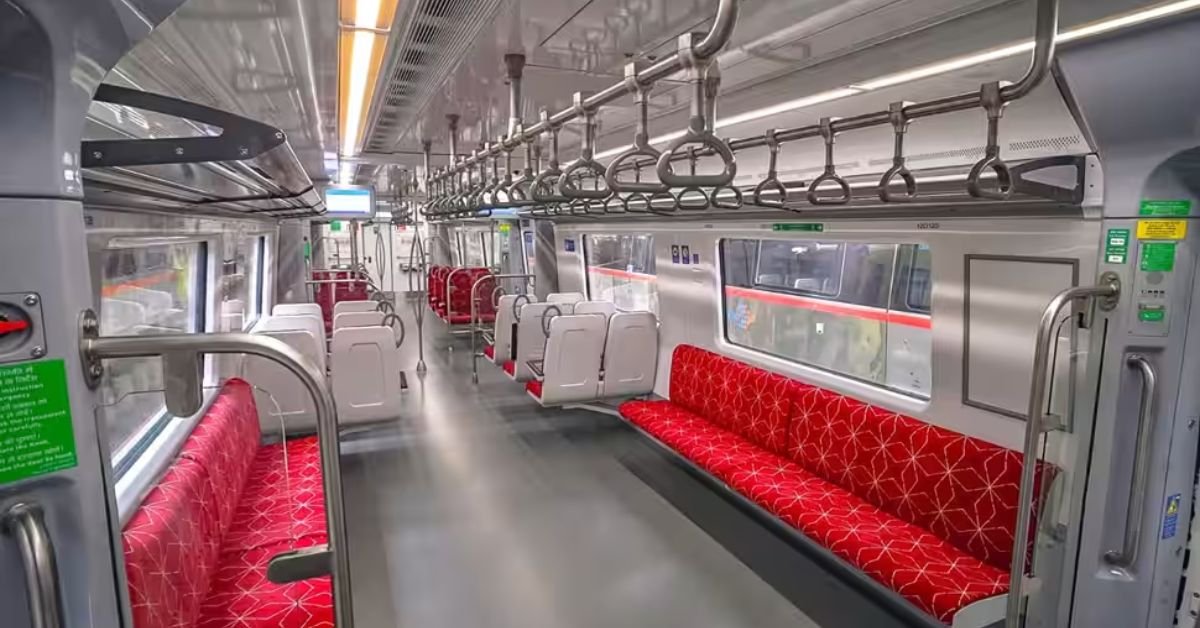
Narendra Modi ushered in a new era of high-speed regional travel in the National Capital Region by dedicating the entire 82-km Delhi–Ghaziabad–Meerut Namo Bharat Regional Rapid Transit System (RRTS) to the nation and flagging off commercial services for both Namo Bharat trains and the Meerut Metro.
The ceremony began around 12:30 PM at Shatabdi Nagar Namo Bharat Station in Meerut, where the Prime Minister flagged off the services.
He then boarded a Meerut Metro train for the ride to Meerut South Station.
At approximately 1:00 PM, he inaugurated and dedicated multiple infrastructure projects worth around ₹12,930 crore before addressing a large public gathering.
Full Launch Of India’s Pioneering RRTS Corridor
The highlight was the dedication of the entire Delhi–Meerut Namo Bharat corridor, India’s first Regional Rapid Transit System.
The Prime Minister commissioned the final remaining sections:
- 5 km from Sarai Kale Khan to New Ashok Nagar in Delhi
- 21 km from Meerut South to Modipuram in Uttar Pradesh
This completes the seamless 82-km route from Sarai Kale Khan (Delhi’s originating hub) to Modipuram (Meerut), connecting vital stations including Sahibabad, Ghaziabad, Duhai, Muradnagar, Modinagar North/South, Partapur, Begumpul, Shatabdi Nagar, and Meerut South.
Namo Bharat trains, with a design speed of 180 km/h and operational speeds up to 160 km/h, now slash the end-to-end journey from Sarai Kale Khan to Modipuram to approximately 58 minutes, a massive improvement over the typical 2–3 hour road commute in peak traffic.
(Some reports note optimal runs as low as 50 minutes, with official figures settling around 58 minutes including stops.) Train frequency will soon improve to every 10 minutes post-launch.
The ₹30,274-crore project, with its foundation stone laid by PM Modi in March 2019, rolled out in phases starting October 2023 and reached this full operational milestone today.
Meerut Metro: A Groundbreaking Shared-Infrastructure First
In a national first, the Meerut Metro operates on the same elevated tracks as the Namo Bharat RRTS.
The Prime Minister inaugurated services on the roughly 21–23 km stretch from Meerut South to Modipuram (with 12–13 stations), running at a maximum operational speed of 120 km/h, making it India’s fastest metro system.
The end-to-end trip, with all scheduled stops, takes about 30 minutes, providing swift intra-city connectivity within Meerut while integrating perfectly with the inter-city RRTS for seamless transfers.
Why This Matters: Key Benefits At A Glance
- Commuter revolution — Reliable, air-conditioned high-speed travel for daily workers, students, and families; no more exhausting road delays.
- Environmental edge — Cuts road congestion, fuel consumption, and vehicular emissions in the densely populated NCR.
- Economic catalyst — Boosts growth in Meerut and satellite towns through better access, job creation in transport/logistics, and real estate momentum.
- Future blueprint — The shared-corridor model offers an efficient, cost-effective template for upcoming RRTS lines across India, blending regional and urban transit needs.
Delhi Chief Minister Rekha Gupta and leaders from Uttar Pradesh have hailed the launch as a “celebration of joy” and a vital step toward sustainable mobility in the region.
Commercial operations for both Namo Bharat and Meerut Metro are now open to the public following today’s events, promising millions a faster, greener way to commute between western Uttar Pradesh and Delhi.
Post's Author