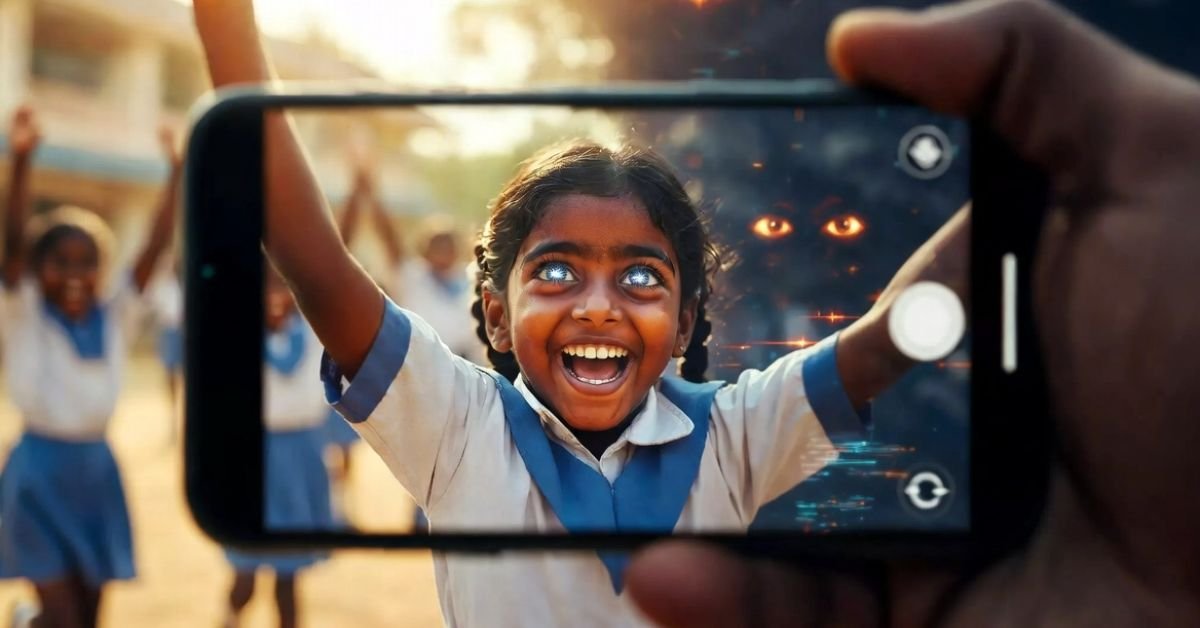

Across India, school Instagram accounts are flooded with colourful reels of uniformed children dancing, singing and performing skits.
The videos, designed to showcase school spirit and attract new admissions, have become a standard marketing tool.
However, the growing trend is now facing sharp criticism from parents, child rights experts and data protection advocates who argue it puts minors at risk in the digital age.
The practice is simple and effective.
A group of primary school students in crisp uniforms twirls to the latest Bollywood track or enacts a lively skit.
Within hours, the reel racks up thousands of views, likes and shares.
School principals say the content highlights talent, builds community pride and gives parents a real glimpse of campus life.
“These reels celebrate creativity and make our school stand out in a competitive market,” says Dr. Meera Sharma, principal of a reputed CBSE school in Bengaluru.
“When children participate willingly, and parents give consent, it creates positive memories and helps the institution grow. Better facilities and more resources ultimately benefit the students themselves.”
Many parents echo this view. “I love seeing my daughter dance with such joy on the school page,” says Priya Menon, mother of a Class 3 student in Mumbai. “It shows she is confident and happy. If the school takes permission, I do not see the harm.”
However, a growing number of voices warn that the bright surface hides serious concerns.
Child psychologists and cyber-safety experts point out that young children cannot fully understand the lifelong consequences of having their faces, voices and school locations permanently available online.
“Once a video is posted, it can be downloaded, edited, deep-faked or shared in harmful contexts years later,” explains Dr. Anjali Rao, child rights activist and founder of SafeNet India.
“We are turning innocent performances into free advertising material without the child’s informed consent. The pressure to perform for the camera can also create anxiety, especially for children who are shy or simply not interested.”
The legal landscape has changed.
The Digital Personal Data Protection Rules 2025, notified in November 2025 under the DPDP Act 2023, require schools to obtain verifiable parental consent before processing any child’s personal data, including photos and videos.
The rules emphasise that consent must be specific, informed and easy to withdraw.
However, many institutions continue to rely on broad “no-objection” forms signed at the start of the academic year or post content without fresh permission for each reel.
Data protection lawyer Rohan Kapoor notes, “Promotional reels often go beyond legitimate educational purposes. Schools must now show they have clear, granular consent and adequate safeguards. Failure to comply can invite heavy penalties under the new rules.”
The divide is evident in parent-teacher WhatsApp groups and education forums.
Some teachers report that only the most photogenic or outgoing students are repeatedly featured, creating subtle peer pressure.
Others argue that blurring faces or using group shots without close-ups could solve the problem while still allowing schools to market themselves.
As the debate intensifies, education boards and the Ministry of Education have remained largely silent.
A senior official, speaking on condition of anonymity, said the government is monitoring the issue but believes “responsible use with consent” can continue.
For now, the reels keep rolling.
A single 15-second video of smiling children can bring dozens of admission enquiries.
The question parents, schools and regulators must answer is whether the short-term marketing gains are worth the long-term digital risks to the very children they claim to nurture.
The conversation is no longer confined to staff rooms.
It has moved to LinkedIn, Twitter and family dinner tables.
The image that captures the moment perfectly, a joyful young girl mid-dance, face glowing with happiness, while an adult hand holds a smartphone that reflects faint digital shadows and watchful eyes, has itself gone viral in education circles, silently asking the same question: Are we celebrating childhood or commodifying it?
What do you think?
Should schools continue posting identifiable children in promotional reels, or is it time for stricter guidelines and face-blurring policies?
Share your views in the comments below.
Post's Author