
Table Of Contents
Health officials are closely tracking a new COVID-19 variant that has quietly emerged after lying dormant for years.
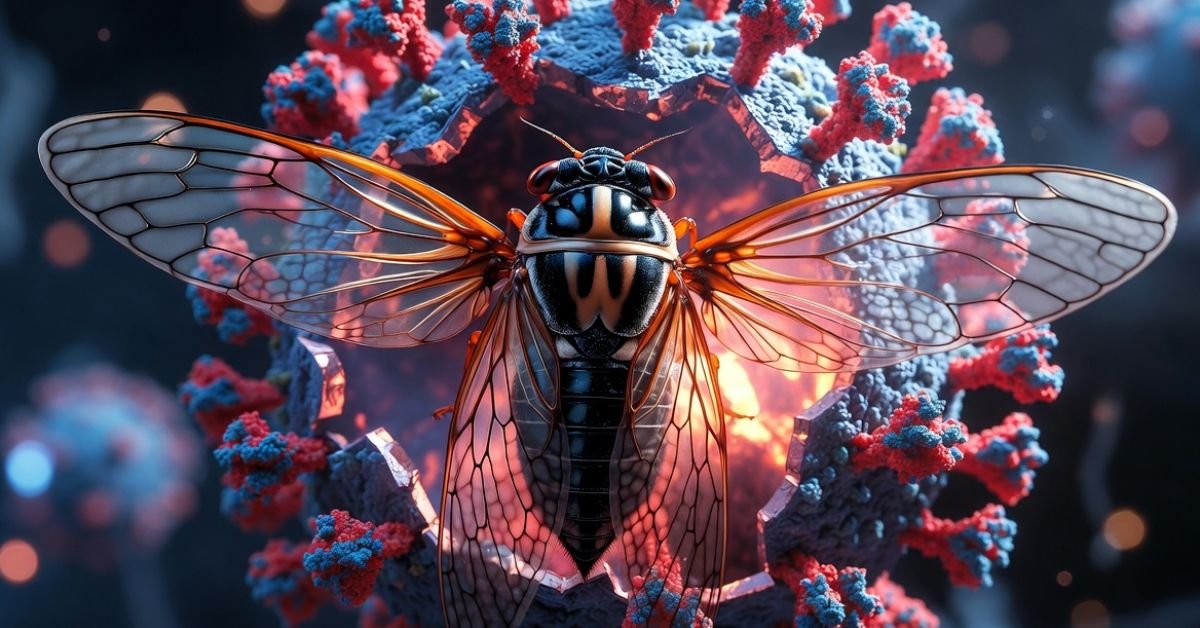
Nicknamed “Cicada,” the BA.3.2 strain is now showing up in wastewater samples across more than two dozen U.S. states, even as overall national cases remain low.
What Is the Cicada Variant?
BA.3.2 is an offshoot of the earlier Omicron subvariant BA.3, which first circulated in late 2021 and early 2022 before fading.
It earned its unofficial nickname from evolutionary biologist T. Ryan Gregory because, like periodical cicadas, it stayed largely undetected (“underground”) for years before resurfacing.
The variant stands out for its heavy mutations: roughly 70–75 changes and deletions in the spike protein compared to the JN.1 and LP.8.1 lineages used in the 2025–2026 COVID vaccines.
These alterations could help it partially evade antibodies from prior infections or vaccinations.
First identified in a South African sample on November 22, 2024, BA.3.2 was listed by the World Health Organization as a Variant Under Monitoring on February 23, 2026.
It reached the U.S. via a traveler from the Netherlands in June 2025 and appeared in clinical samples by January 2026.
How Widespread Is It?
As of February 11, 2026, the CDC detected BA.3.2 in:
- Wastewater from 132 sites across at least 25 states
- Nasal swabs from four U.S. travelers
- Clinical samples from five patients
- Three airplane wastewater samples
It has now been reported in at least 23 countries, with higher prevalence (up to 10–40%) in parts of northern Europe.
Despite the rise in detections, BA.3.2 has not yet become dominant in the U.S. or driven a major surge. Overall, COVID activity stays low heading into spring.
Symptoms To Watch For
Health experts say Cicada causes the same symptoms as recent variants. Common signs include:
- Cough
- Fever or chills
- Sore throat
- Congestion or a runny nose
- Shortness of breath
- Fatigue
- Loss of taste or smell (less common now)
Severity appears similar to other circulating strains; no data yet shows it causes worse illness.
Vaccine Protection And Expert Advice
Lab studies show BA.3.2 can reduce neutralization from current vaccines, meaning it might be easier to catch.
However, the 2025–2026 formulations (LP.8.1-adapted mRNA and JN.1-adapted protein) are still expected to shield against severe disease, hospitalization, and death.
Dr. Robert H. Hopkins Jr., medical director of the National Foundation for Infectious Diseases, notes:
“We may see Cicada become the dominant strain… but that is by no means certain.”
He emphasizes that boosters remain a smart move for those eligible, especially older adults and people with underlying conditions.
Key Takeaways For Readers
- Test if you feel sick; early detection helps.
- Stay up to date on vaccines and consider a spring booster if recommended.
- Practice good hygiene and wear a mask in crowded indoor spaces during the respiratory season.
- Monitor local wastewater trends for early signals in your area.
The CDC continues multimodal surveillance (genomic sequencing, wastewater, and traveler testing) to stay ahead of any shifts.
While BA. 3.2’s immune-evasion potential warrants attention, experts stress that widespread immunity from vaccines and past infections has kept severe outcomes low.
For the latest updates, check CDC.gov or WHO.int.
Stay informed, stay protected, and breathe easy knowing science is watching this one closely.
Post's Author