
Table Of Contents
In a landmark achievement for global wildlife conservation, India’s Project Cheetah has reached a pivotal milestone: the first second-generation cheetah litter born on Indian soil.
Mukhi, the inaugural cub born in India in March 2023, gave birth to five healthy cubs in November 2025 at Kuno National Park in Madhya Pradesh.
This breakthrough underscores the project’s growing momentum, proving that African cheetahs can not only survive but reproduce successfully in their historical range after a 70-year absence.
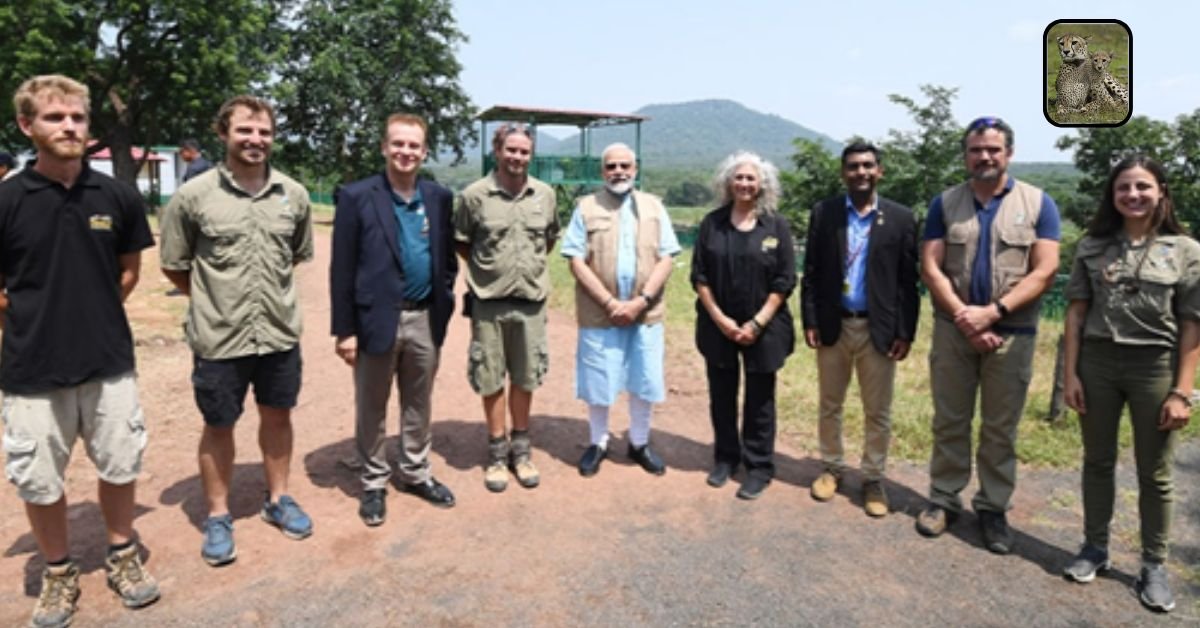
Launched in September 2022 under the visionary leadership of Prime Minister Narendra Modi, Project Cheetah represents the world’s first intercontinental translocation of a large carnivore.
The initiative began with eight cheetahs from Namibia released by the Prime Minister himself on his birthday, followed by 12 from South Africa in February 2023.
These 20 founder animals laid the foundation for what has become a remarkable conservation story.
Current Population And Breeding Success
As of December 2025, India is home to 32 cheetahs, a significant increase from the initial 20 imports.
Of these, 21 are India-born cubs, highlighting robust natural reproduction.
The population includes adults, sub-adults, and the latest additions from Mukhi’s litter.
Key breeding highlights include:
- Multiple litters from imported females like Jwala (8 cubs), Aasha (3 cubs), Gamini (6 cubs), and Nirva (several litters).
- Mukhi’s five cubs mark the first offspring from an India-born mother, a critical step toward genetic viability and self-sustainability.
This reproductive success far exceeds initial expectations, with cub survival rates around 61%, well above the global average of 40% for the species.
Expanding Habitats And Community Impact
The project is no longer confined to Kuno National Park (748 km² core area).
In 2025, cheetahs were relocated to Gandhi Sagar Wildlife Sanctuary, establishing a metapopulation across interconnected landscapes.
This phased expansion aims for 60–70 cheetahs over 17,000 km² by 2032.
Local communities have embraced the initiative, with over 450 “Cheetah Mitras” acting as ambassadors and 380 direct jobs created in tracking, patrolling, and eco-tourism.
Villages receive 5% of tourism revenue, fostering coexistence and economic benefits.
Global Collaboration And Future Outlook
India’s success has strengthened ties with African nations.
In November 2025, Botswana gifted eight cheetahs during President Droupadi Murmu’s visit, with arrivals expected soon to boost genetic diversity.
The International Big Cat Alliance (IBCA), launched by Prime Minister Modi in 2023, positions India as a global leader in big cat conservation.
Despite early challenges, including some mortality from natural causes, the project’s scientific rigor, community involvement, and diplomatic finesse have turned skeptics into supporters.
As cheetahs reclaim India’s grasslands, Project Cheetah stands as a beacon of hope, demonstrating how science-driven rewilding can restore ecological balance and inspire worldwide biodiversity efforts.
Post's Author