
Table Of Contents
IndiGo Flight
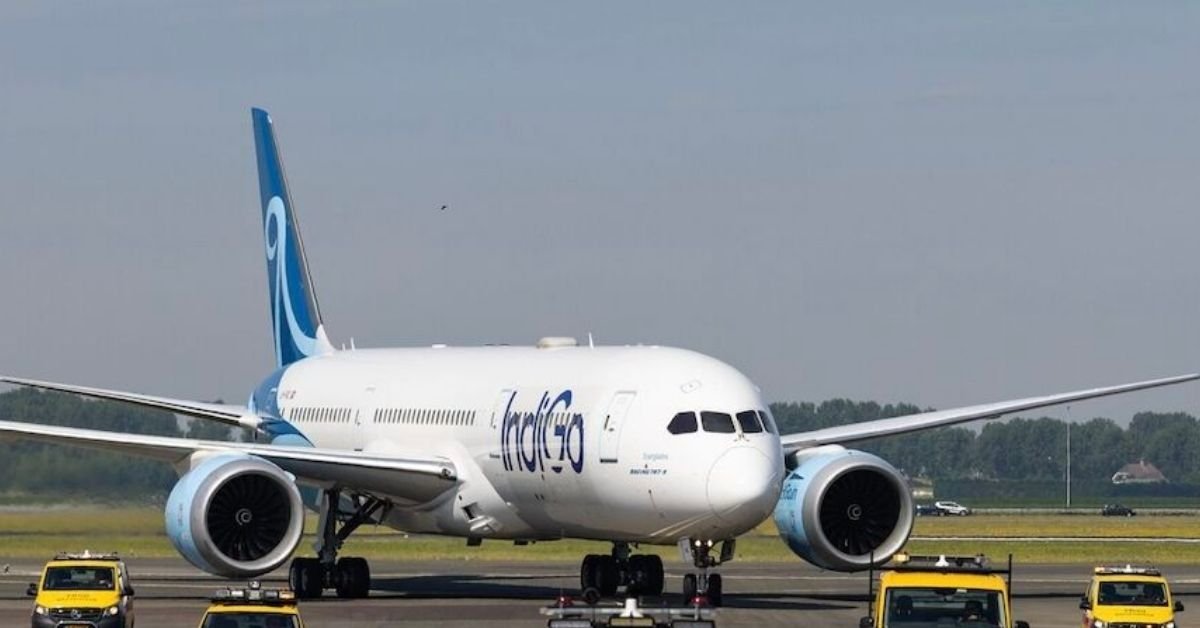
In a chilling reminder of aviation’s vulnerabilities, an IndiGo flight en route from Kuwait to Hyderabad was diverted to Mumbai early Tuesday morning after a hoax bomb threat warned of a “human bomb” onboard.
The incident, which unfolded just hours ago, underscores the airline’s swift response amid a surge in such threats across Indian airports.
All 150 passengers and crew landed safely, but the event has reignited debates on airport security and passenger rights in India’s booming aviation sector.
The Incident Unfolds
IndiGo flight 6E1234 departed Kuwait International Airport at around 1:30 AM IST, bound for Hyderabad’s Rajiv Gandhi International Airport.
Midway through the journey, Hyderabad airport officials received an anonymous email at approximately 3:45 AM, claiming a passenger was carrying explosives disguised as a “human bomb.”
Without hesitation, air traffic control directed the Airbus A320 to divert to Mumbai’s Chhatrapati Shivaji Maharaj International Airport (CSMIA), where it touched down safely at 4:20 AM.
Emergency responders, including bomb squads and canine units, were pre-positioned at an isolation bay.
A thorough two-hour search found no threats, confirming the alert as a hoax.
IndiGo issued a statement prioritizing safety: “We followed all protocols and cooperated fully with authorities. Refreshments were provided, and updates were shared regularly throughout the event. Our customers, crew, and aircraft’s security remain paramount.” The flight is now cleared to resume to Hyderabad later today, with minimal delays for affected travelers.
This is not an isolated scare.
Just last week, a similar threat forced an IndiGo flight from Bahrain to Hyderabad to divert to Mumbai.
Broader reports indicate a spike in hoax calls targeting Indian carriers, with over a dozen incidents in November alone, often traced to overseas IP addresses.
Passenger Perspectives And Operational Strain
Onboard accounts, shared via social media, paint a picture of controlled anxiety. “We were mid-meal when the captain announced the diversion, calm but firm,” tweeted one passenger from Mumbai.
Families with children praised the crew’s composure, although frustration bubbled over due to delays in deplaning and rebooking.
IndiGo, India’s largest carrier with over 2,300 daily flights, faces mounting operational pressures.
Recent X posts highlight chronic issues, including flight cancellations due to crew shortages, delays caused by air traffic congestion, and even a global Airbus software recall that grounded 200 IndiGo planes.
One user vented: “Stuck for hours with no pilot, IndiGo’s monopoly is hurting us all.” These woes arise as fuel costs rise and demand surges following the pandemic.
However, amid the turbulence, IndiGo is expanding aggressively.
Just yesterday, it announced new routes from Navi Mumbai International Airport (NMIA), launching on December 25 with connections to Delhi, Bengaluru, and eight other destinations, aiming for 100 daily flights by March 2026.
A daily Indore-Rewa link will start on December 22, boosting Madhya Pradesh’s tourism.
Insights: Balancing Growth And Security
This hoax diversion highlights a dual reality for IndiGo: explosive growth meets escalating risks.
With a 60% domestic market share, the airline drives India’s aviation boom, projected to be the world’s third-largest by 2030.
However, experts warn that unchecked hoaxes could erode trust and inflate costs, with each incident resulting in $50,000 to $100,000 in diversion and additional checks.
For regulators like the DGCA, it is a call to action: Enhance AI-driven threat screening and penalize hoax perpetrators more stringently.
Passengers, meanwhile, should opt for travel insurance that covers disruptions.
IndiGo offers waivers, but proactive apps like FlightAware can flag issues early.
As IndiGo charts new skies from Navi Mumbai, incidents such as today’s remind us: Safety is not just a protocol; it is the ticket to sustainable skies.
Travelers, stay vigilant, report suspicions, and fly informed.
Author