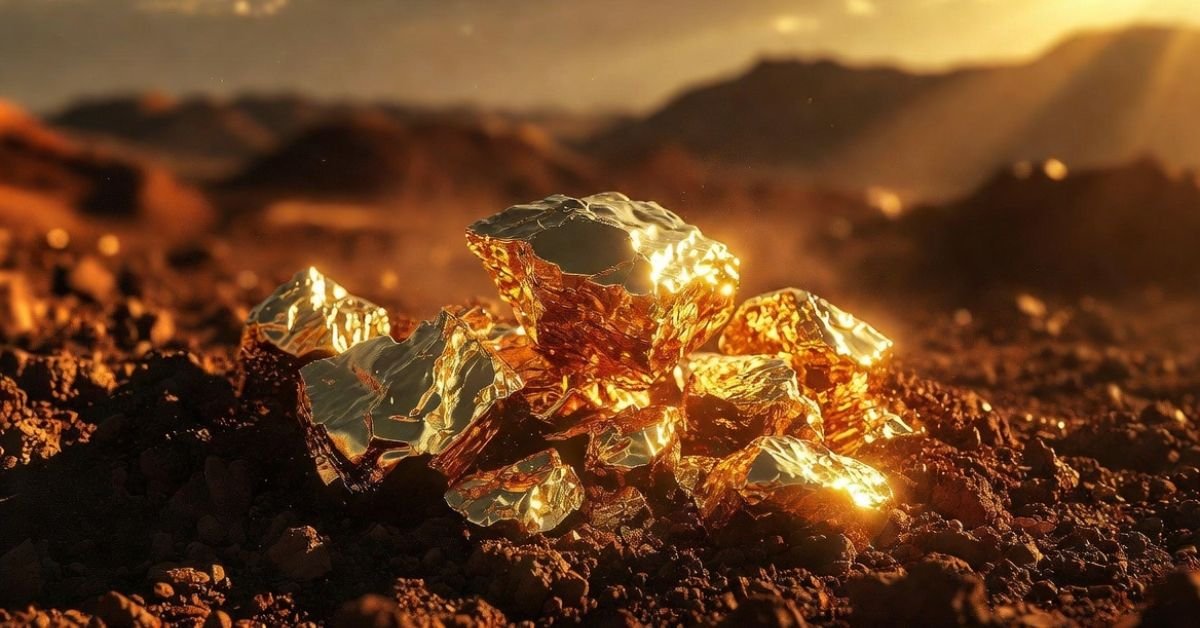

Karnataka continues to overwhelmingly dominate India’s limited domestic gold production, accounting for nearly 91% of the country’s total gold ore output in the financial year 2024-25.
According to data from the Indian Bureau of Mines, India produced 702,975 tonnes of gold ore during FY 2024-25.
Karnataka contributed a commanding 642,302 tonnes, dwarfing Andhra Pradesh (51,715 tonnes) and Jharkhand (8,958 tonnes).
In terms of refined primary gold, national output stands at approximately 1.4–1.6 tonnes annually, with Karnataka supplying the vast majority.
The Hutti Gold Mines in Raichur district, operated by the state-owned Hutti Gold Mines Company Ltd (HGML), remains the undisputed engine of India’s gold production.
Located near Hutti town, the complex includes the main underground operations and satellite mines at Uti and Hira-Buddini.
In FY 2024-25, HGML produced 1,606.29 kg (1.61 tonnes) of gold from 6.84 lakh tonnes of ore milled, recording a turnover of ₹1,224.75 crore and a pre-tax profit of ₹592.90 crore.
HGML is actively pursuing modernisation, including shaft deepening and exploration at nearby sites, to sustain and expand output amid sustained high global gold prices.
Meanwhile, the historic Kolar Gold Fields (KGF) in Kolar district, about 100 km east of Bengaluru, is on the cusp of a modern revival.
Once Asia’s deepest gold mine, KGF closed its underground operations in 2001 after producing over 900 tonnes of gold in its 120-year history.
The current focus has shifted to the surface reprocessing of 13 tailings dumps, which contain an estimated 33 million tonnes of waste and around 23 tonnes of recoverable gold.
Using advanced, environmentally friendly technologies such as heap leaching and carbon-in-pulp processing, the project aims to produce approximately 750 kg of gold per year upon full operationalization.
As of April 2026, pre-commercial trials are progressing following regulatory clearances and auctions.
A parliamentary standing committee in March 2026 urged the Union Ministry of Mines to expedite monetisation of the tailings to reduce environmental risks and generate local employment in the KGF-Robertsonpet area.
In parallel, Andhra Pradesh is set to emerge as a secondary player with the Jonnagiri gold mine (Kurnool district), India’s first major private-sector primary gold project since Independence, expected to commence commercial production shortly and target 600–750 kg annually.
With India importing over 90% of its annual gold requirement (800–900 tonnes), these initiatives in Karnataka and neighbouring states represent a modest yet strategically important step toward greater self-reliance.
Sustained high gold prices and technological upgrades are making previously uneconomic reserves viable, potentially pushing national primary production toward 3 tonnes per year in the near term.
Industry observers note that Karnataka’s continued leadership, from the active fields of Raichur to the revived tailings of Kolar, underscores the state’s enduring role as India’s gold capital.
Post's Author