
Table Of Contents
Natural Farming
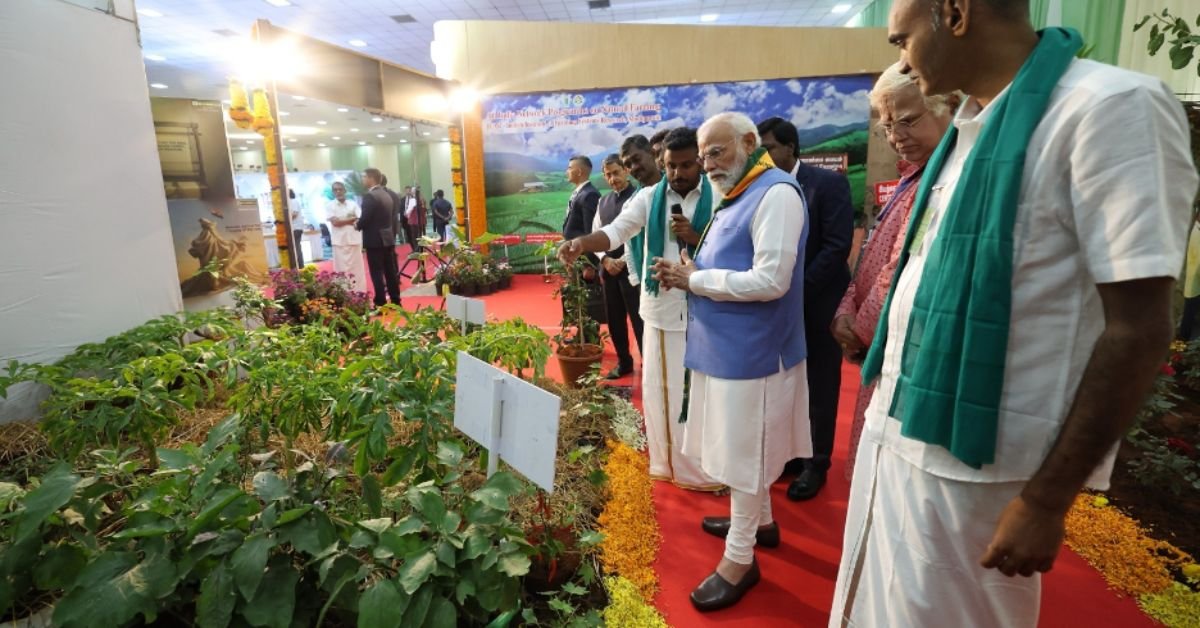
In a heartfelt LinkedIn article titled “India and natural farming, the way ahead!“, Prime Minister Narendra Modi has issued a passionate call for Indians to embrace natural farming, drawing from his recent visit to the South India Natural Farming Summit 2025 in Coimbatore.
Posted today, the piece reflects on the event’s transformative energy and positions natural farming as a cornerstone of India’s sustainable agricultural future.
A Summit That Sparked Inspiration
The Prime Minister’s reflections stem from his attendance at the summit on November 19, 2025, organized by the Tamil Nadu Natural Farming Stakeholders Forum.
Held over three days in Coimbatore, often referred to as the “Manchester of South India” due to its MSME-driven textile economy, the event drew over 50,000 participants, including farmers, scientists, entrepreneurs, and policymakers from Tamil Nadu, Kerala, Karnataka, Telangana, Andhra Pradesh, and Puducherry.
It showcased eco-friendly practices, market linkages for farmer-producer organizations (FPOs), and innovations in organic inputs and agro-processing, honoring the legacy of organic pioneer G. Nammalvar.
Modi described the summit as a “shift in mindset, imagination, and confidence” among India’s agri-entrepreneurs.
During interactions, he met diverse innovators, including a farmer who manages 10 acres of multi-layered crops with 60 indigenous cows and 400 goats; a preserver of native rice varieties, such as Mapillai Samba, who turns them into health mixes and protein bars; and a biotech professional employing 600 coastal fishermen in seaweed-based biofertilizers.
“Their life journeys and commitment to doing something new were noteworthy,” Modi wrote, highlighting a shared dedication to soil health and community upliftment.
Roots In Tradition, Backed By Science
Natural farming, Modi explained, combines India’s ancient wisdom, such as utilizing Panchagavya, Jeevamrit, and Beejamrit for soil enrichment, with modern ecological principles.
It avoids synthetic chemicals, promotes biodiversity through integrated crop-livestock systems, and recycles farm waste via mulching.
This approach counters decades of chemical overuse, which has eroded soil fertility, spiked costs, and heightened vulnerability to climate shocks.
The Prime Minister praised South India’s role as a “living university of agriculture,” citing traditional water management systems such as temple tanks and the Kallanai Canal.
He linked it to national pushes for millets (“Shree Anna”), noting how chemical-free methods will boost their global exports.
The growing involvement of women farmers adds a vital social dimension, fostering inclusive rural economies.
Government Momentum: From Mission To Mainstream
India’s progress is accelerating.
Launched in November 2024 as a standalone Centrally Sponsored Scheme under the Ministry of Agriculture, the National Mission on Natural Farming (NMNF) boasts a ₹2,481 crore outlay for the period 2025-26, with ₹1,584 crore allocated from the Centre.
In its first year, it has linked lakhs of farmers, converting thousands of hectares nationwide, including 35,000 in Tamil Nadu alone.
Key features include:
- Cluster-Based Rollout: Targeting 15,000 Gram Panchayat clusters to reach 1 crore farmers and 7.5 lakh hectares in two years, prioritizing areas with existing natural farming hubs, self-help groups, and FPOs.
- Bio-Input Hubs: 10,000 Bio-Input Resource Centres (BRCs) for accessible, ready-to-use natural inputs.
- Certification and Markets: Simplified certification, common branding, and geo-tagged monitoring via an online portal. Convergence with schemes like PM-KISAN (₹18,000 crore released on November 19) and expanded Kisan Credit Cards ensures financial support.
Supporting measures include export incentives and livestock integration, which make natural farming both resilient and profitable.
A Practical Path Forward: Start Small, Scale Big
Modi’s clarion call? Begin with “one acre, one season.”
This low-risk entry builds confidence, blending traditional methods with scientific validation.
He urged joining FPOs for collective power or launching startups in value-added products, such as bioactive biochar or tapioca-based bioethanol.
As a former Chief Minister of Gujarat, who championed soil health initiatives, Modi’s insights carry weight.
His post echoes summit themes: treating farms as “living laboratories” for research.
However, challenges persist, including scaling certification, countering initial yield dips, and educating young people.
Success stories from Coimbatore suggest solutions, such as trained graduates supplying 30 tonnes of vegetables monthly, or FPOs empowering tapioca growers.
Why This Matters Now
With climate erratic and global food security strained, India’s natural farming pivot could position it as a “global hub,” as Modi envisioned at the summit.
It promises healthier soils, lower costs (up to 20-30% input savings), and nutritious produce, aligning with the UN Sustainable Development Goals.
For urban readers eyeing “back-to-roots” ventures or policymakers, Modi’s message is clear: convergence of tradition, science, and enterprise will make agriculture productive and sustainable.
The Prime Minister ended optimistically: “If you know of teams working on natural farming, do let me know too!” This open invite underscores a people-driven movement.
As India marks its agricultural renaissance, Coimbatore’s echoes may well sow the seeds of a greener tomorrow.
Author