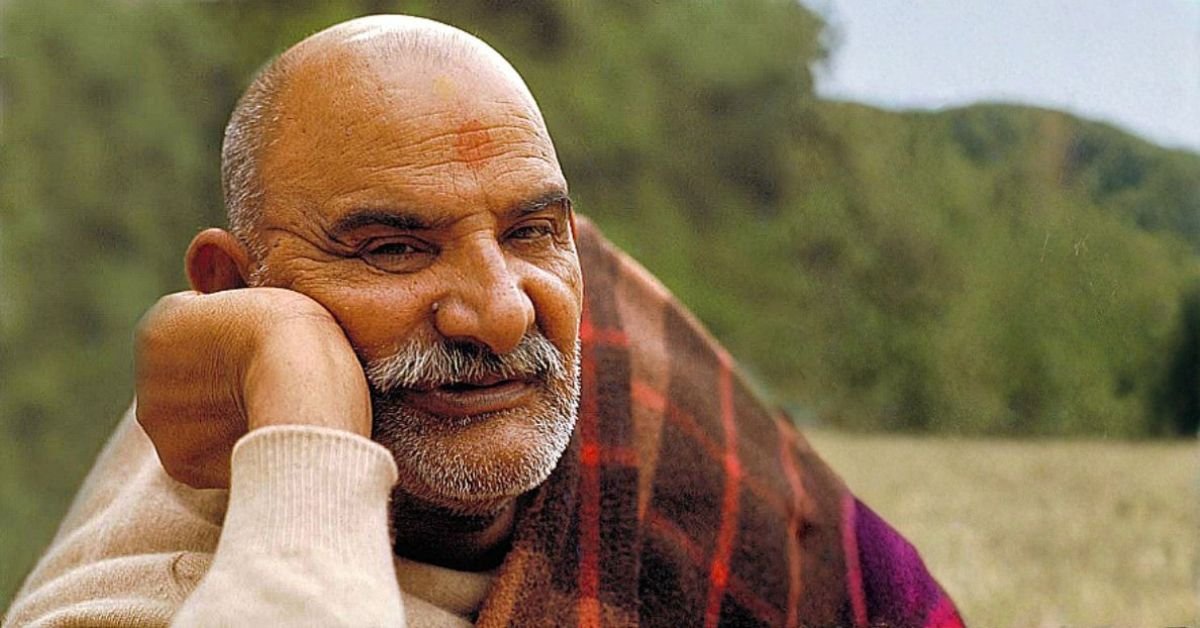

Persistent online claims suggest Microsoft cofounder Bill Gates made a private pilgrimage to the Kainchi Dham ashram of Neem Karoli Baba in Uttarakhand.
Official records and credible reporting tell a more measured story.
The link is indirect, stemming from advice given by Steve Jobs, and there is no evidence that Gates ever visited the site.
Neem Karoli Baba (1900- 1973), also known as Maharaj ji or Neem Karori Baba, was a revered Hindu saint and devotee of Lord Hanuman.
He founded several ashrams across northern India.
The most prominent being Kainchi Dham near Nainital, established in the early 1960s.
Known for his teachings on unconditional love, selfless service, and constant remembrance of the divine, Baba attracted both Indian devotees and a wave of Western seekers in the 1960s and 1970s, including Ram Dass, whose book Be Here Now helped popularise his message worldwide.
Steve Jobs visited Kainchi Dham in 1974, shortly after Baba’s death on September 11, 1973.
Though he never met the guru in person, Jobs later credited his time in India, including long periods of reflection at the ashram and nearby sites, with shaping his emphasis on intuition, simplicity, and human-centred design at Apple.
In 2015, Facebook cofounder Mark Zuckerberg revealed during a public conversation with Prime Minister Narendra Modi that Steve Jobs had advised him, during a difficult period for the company around 2008 to 2009, to visit the same Indian temple.
Zuckerberg made the journey to Kainchi Dham and described it as a pivotal moment that helped him recommit to Facebook’s mission of connecting people.
The connection to Bill Gates is documented in a 1997 interview with The New York Times.
At the time of Microsoft’s $150 million investment in Apple, Jobs reflected on his rival: “I wish him the best, I really do. I think he and Microsoft are narrow. He would be a broader guy if he had dropped acid once or gone off to an ashram when he was younger.”
While Jobs did not name Neem Karoli Baba ashram specifically, the parallel with his own experience and his later advice to Zuckerberg led many to associate the remark with Kainchi Dham.
Despite widespread social media narratives and some unverified travel blogs claiming that Gates visited the ashram, no photographs, interviews, or statements from Gates or the ashram authorities support this claim.
Gates has never referenced such a trip in his books, annual letters, or public appearances.
His documented visits to India have been professional and philanthropic, focused on the Bill and Melinda Gates Foundation’s work in polio eradication, vaccination drives, maternal and child health, sanitation, and digital public infrastructure.
These initiatives have benefited hundreds of millions of Indians since the 1990s.
The episode illustrates two distinct paths to impact within Silicon Valley.
Jobs and Zuckerberg sought personal clarity and renewed purpose through silence and spiritual reflection at Kainchi Dham.
Gates pursued large-scale, evidence-based solutions through science, engineering, and systemic change.
This disciplined approach echoes Baba’s emphasis on service while operating firmly in the secular realm.
More than five decades after Neem Karoli Baba’s passing, his ashram continues to draw global attention, reminding a new generation of leaders that moments of stillness and introspection can complement or even catalyse world-changing innovation.
Post's Author
