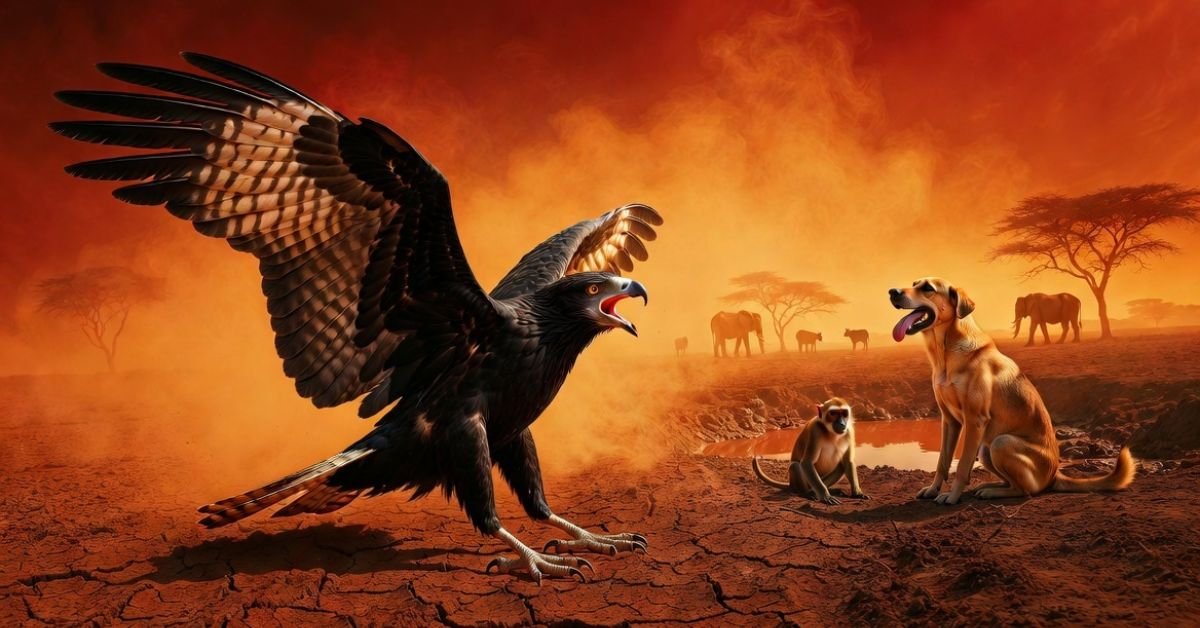

Prolonged and intense heatwaves are severely affecting animals in India, with temperatures exceeding 45°C in many parts of the country.
Wildlife rescuers, veterinarians and farmers report a sharp rise in cases of dehydration, heatstroke and distress, as this summer turns deadlier for millions of birds, mammals and livestock.
Birds are among the worst affected.
Unable to sweat, species such as black kites, pigeons, bulbuls, parakeets and crows pant rapidly to cool themselves, quickly becoming exhausted and dehydrated.
Many collapse mid-flight or fall from trees. In major cities including Delhi-NCR, Ahmedabad, Pune and Bengaluru, animal rescue organisations are receiving a surge in emergency calls.
“We are getting 30–40 distress calls every day,” said Dr Shalini Singh, senior veterinarian with Wildlife SOS in Bengaluru.
“The birds arrive with beaks open wide, panting heavily and completely disoriented. Despite our best efforts, some do not survive.”
The crisis is equally severe in forests and rural areas.
Dried-up rivers, lakes and waterholes are forcing elephants, tigers, monkeys and other mammals to travel long distances in search of water, often leading to increased human-wildlife conflict.
Reports of monkeys and other animals drowning in village wells have become disturbingly common.
A major international study published this month in Nature Ecology & Evolution has warned that, without stronger climate action, 74 per cent of land animal habitats worldwide could face extreme heatwaves by 2050, with India’s tropical regions among the most vulnerable.
Livestock and dairy animals are also suffering significant losses.
Heat stress has reduced milk production in cows and buffaloes by 15–30 per cent, lowered fertility rates and weakened immunity, leading to higher mortality.
Poultry farms have recorded sharp increases in deaths, while working animals show clear signs of exhaustion.
State animal husbandry departments have issued urgent advisories, asking farmers to provide shade, sprinklers and a continuous water supply.
In urban heat islands like Bengaluru, stray dogs and cats are particularly vulnerable.
They are often seen lying motionless under parked vehicles or in any available shade, too weak to move or seek food.
Zoos, wildlife sanctuaries and community groups have intensified their efforts, installing coolers, foggers and modifying animal diets to help them cope.
Many citizens have begun placing shallow earthen pots of water on balconies, rooftops and streets, a simple measure that rescuers say is saving lives.
Experts emphasise that while such individual actions provide immediate relief, the crisis requires long-term solutions: restoration of water bodies, creation of wildlife corridors with adequate shade, and stronger measures to combat climate change.
As the India Meteorological Department has forecast above-normal temperatures for the coming weeks, conservationists warn that protecting the country’s rich biodiversity and rural economy from these extreme heat events has become an urgent national priority.
Post's Author
